The Chair That Belonged to Your Grandmother: How Nordic Secondhand Culture Turns Objects Into Memory
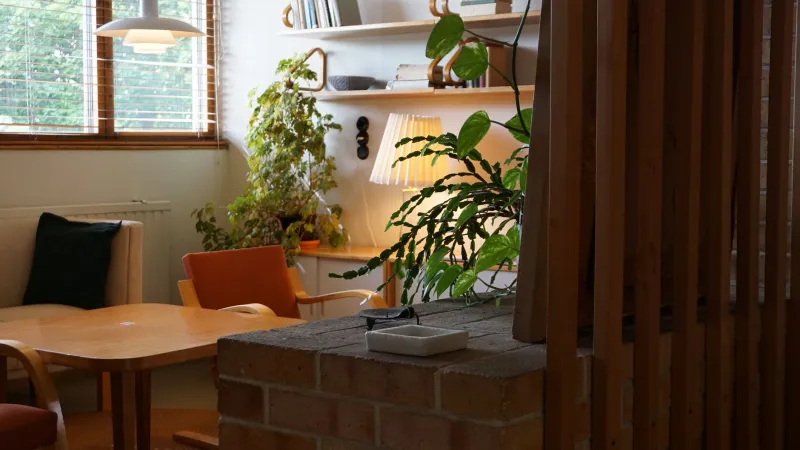
There's a specific kind of object that shows up in a lot of Scandinavian homes. It's usually a piece of mid-century furniture — a Hans Wegner chair, maybe, or a simple birch sideboard from the 1960s — that's been repaired at least once, shows honest signs of use, and has almost certainly passed through more than one set of hands. Ask the owner about it and they'll tell you exactly where it came from. Their parents' house in Gothenburg. An estate sale in Oslo. A cousin who moved to a smaller apartment.
In America, that same story often ends with the furniture being donated to Goodwill or left on the curb. We move on. We upgrade. We buy new.
The difference between these two instincts reveals something much deeper than shopping habits.
When Secondhand Isn't a Budget Decision
American secondhand culture has historically been framed around economics. You shop vintage because you can't afford new, or because you're consciously trying to reduce waste. Sustainability discourse has added a layer of moral credit to the practice, which is genuinely useful, but it still positions pre-owned objects as a category of compromise.
Nordic secondhand culture operates from an entirely different premise. In Sweden, Norway, Denmark, and Finland, the secondhand market — from dedicated vintage design dealers to neighborhood loppis (flea markets) to the Swedish institution of Blocket, a massive peer-to-peer marketplace — isn't primarily about saving money or saving the planet. It's about the conviction that objects with history are inherently more interesting than objects without it.
This is a subtle but important distinction. An Ikea Poäng chair bought new is functional and affordable. The same chair, bought from someone who used it for fifteen years and tells you it was their reading chair, is something else. It has a narrative. Nordic design culture tends to believe that narrative adds value — real value, not just sentimental value.
The Restoration Instinct
One of the more striking expressions of this philosophy is the Nordic approach to furniture restoration. In major Scandinavian cities, there's a thriving ecosystem of craftspeople who specialize in bringing vintage pieces back to life — not as replicas of their original state, but as objects that honestly show their history while functioning beautifully in the present.
This is meaningfully different from American-style flipping, where the goal is usually to erase signs of age and resell at a profit. Nordic restoration is more comfortable with what the Japanese call wabi-sabi — the beauty of impermanence and wear. A refinished Danish teak table might still carry the ring stains from forty years of coffee cups. The craftsperson's job isn't to hide that. It's to stabilize the piece and let it keep accumulating life.
Swedish design brand Massproductions has built an entire aesthetic around this sensibility, creating new pieces that look like they've already lived a while. Copenhagen-based furniture restorer and dealer Klassik has turned the curation of original mid-century Danish pieces — Finn Juhl, Arne Jacobsen, Børge Mogensen — into a form of cultural preservation. These aren't just retail operations. They're arguments about what objects are for.
Inherited Furniture as Cultural Continuity
The practice of passing furniture between generations is so normalized in Scandinavia that it barely registers as notable. In Norway, the concept of arv — inheritance — extends well beyond legal estate matters into the casual, ongoing transfer of useful objects between family members and friends. A dining table moves from parents to adult children. A lamp follows a cousin to a new city. A bookshelf gets passed along when someone downsizes.
This creates a kind of material continuity that American culture, with its emphasis on newness and self-creation, tends to disrupt. The American dream has always been partly about leaving your parents' world behind — including their stuff. Starting fresh. Furnishing your own identity from scratch.
But something interesting is happening at the higher end of the American market. Wealthy buyers are increasingly seeking out vintage Scandinavian design pieces — original Eames chairs, authentic Hans Wegner shell chairs, genuine Alvar Aalto stools — at prices that dwarf their original retail cost. What they're paying for, at least in part, is exactly what Nordic secondhand culture has always understood: the weight of history in an object.
The irony is that this appreciation for provenance has been the default setting in Scandinavian households for generations, practiced not by collectors paying five figures for authenticated pieces but by ordinary families passing a lamp from apartment to apartment.
What America's Throwaway Habit Is Actually Costing Us
The U.S. generates more waste per capita than almost any country on earth, and a significant portion of that is furniture and household goods. The fast-furniture model — buy cheap, use briefly, discard — has real environmental costs, but it also has cultural costs that are harder to measure.
When objects are disposable, they don't accumulate meaning. And when objects don't accumulate meaning, homes become less like inhabited spaces and more like staged sets — always provisional, always one trend cycle away from being replaced.
Nordic interiors tend to feel different from this. Not because they're more expensive or more curated, but because they're more settled. There's a sense that the objects in the room have been chosen carefully and are expected to stay. The secondhand chair isn't a placeholder until something better comes along. It's the thing.
A Different Theory of Ownership
Ultimately, Nordic secondhand culture is built on a theory of ownership that Americans are only beginning to articulate: that you don't really own objects so much as steward them for a while. The chair existed before you and will exist after you. Your job is to use it well and pass it on in decent shape.
That's not a sustainability talking point. It's a philosophy. And it produces homes, and habits, and relationships with the material world that feel genuinely different — more grounded, more honest, more connected to time.
Maybe the most radical thing about a Swedish grandmother's dining table isn't that it's vintage. It's that someone thought it was worth keeping.