Cold Rooms, Clear Minds: Why Scandinavian Minimalism Is the Design Philosophy America Desperately Needs Right Now
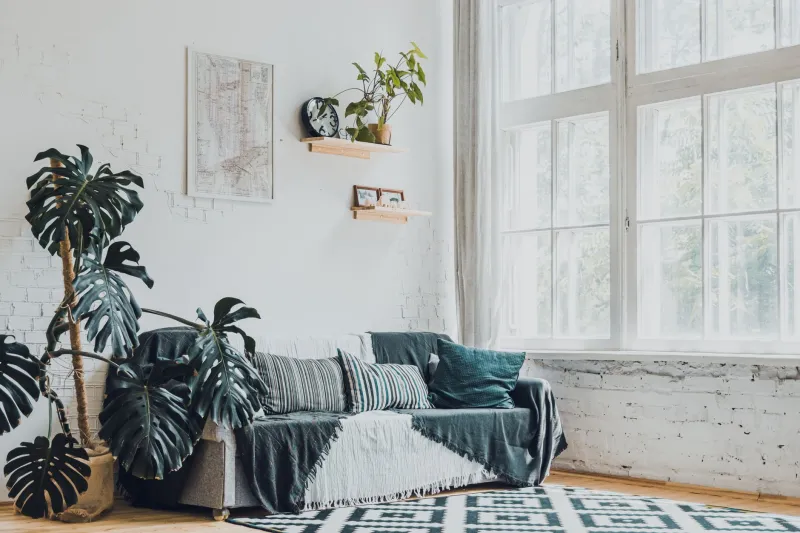
There's a specific kind of exhaustion that comes from living in an American home in 2024. The Amazon boxes stacked by the door. The gallery wall that started as Pinterest inspiration and ended as visual noise. The open-concept living room that somehow feels both too big and too full at the same time. If any of that sounds familiar, you're not alone — and you're probably already halfway to understanding why so many people are quietly dismantling their interiors and rebuilding them with something that looks, on the surface, almost aggressively simple.
Scandinavian minimalism has been circling American design culture for years, but what's happening now feels different. It's less about buying a particular IKEA shelf (though, sure, that too) and more about a genuine philosophical reckoning with how we want to live. And to understand why it hits so hard right now, you have to go back to where it came from.
Born from Darkness: The Climate That Created an Aesthetic
Nordic design didn't emerge from a mood board. It emerged from necessity. In Norway, Sweden, Finland, and Denmark, winters are punishing — not just cold, but profoundly dark. In parts of northern Scandinavia, the sun barely grazes the horizon for weeks at a stretch. When you spend that much time indoors, your relationship with your interior space becomes deeply personal, almost psychological.
The response wasn't to fill that darkness with stuff. It was to make every object earn its place. Light — natural and artificial — became a design element as important as any piece of furniture. Texture replaced decoration. A single wool throw on a wooden chair communicated warmth more effectively than a room stuffed with decor. This wasn't minimalism as a style choice; it was minimalism as a coping mechanism, and over generations, it became a cultural identity.
The Finnish concept of sisu — a kind of resilient inner strength — shows up in design as much as it does in character. Danish hygge, which Americans have enthusiastically adopted as a vibe, is really just the design expression of that same philosophy: create conditions for comfort and connection, then get out of the way.
What Americans Get Right (and Wrong) About the Look
Here's the thing about Nordic minimalism that gets lost in translation: it's not about emptiness. Walk into a well-designed home in Stockholm or Helsinki and you'll notice that the spaces feel lived in — there are books on the shelves, a candle that's clearly been burned many times, a chair that's been sat in. What's absent is the performative clutter, the decor that exists to signal rather than to serve.
American interpretations sometimes miss this distinction. The aesthetic gets flattened into a formula: white walls, light wood, a single plant, maybe a linen pillow with some illegible Scandinavian word on it. The result looks like a rental property staging, not a home. It's minimalism as costume rather than conviction.
Authentic Nordic-influenced design asks harder questions. Why does this object exist in this room? Does it serve a function, create genuine comfort, or carry personal meaning? If it doesn't do at least one of those things, it probably shouldn't be there. That's a more demanding standard than most American interiors are built around, and it requires a different kind of restraint — not the restraint of deprivation, but the restraint of someone who's thought carefully about what actually matters.
The Practical Translation: Making It Work in American Spaces
So how do you bring this philosophy into a Chicago condo or a suburban house in North Carolina without it feeling like a design magazine shoot nobody actually lives in? A few principles that Nordic designers consistently return to:
Start with light before you start with objects. In Scandinavian homes, lighting is layered — ambient, task, and accent — because it has to work year-round. Americans tend to default to overhead lighting, which flattens a space. Add floor lamps, candlelight, and directional task lighting, and the room changes character entirely.
Choose materials over finishes. Nordic interiors lean heavily on raw or lightly finished natural materials — solid wood, stone, wool, linen, ceramic. These age well and develop character. High-gloss finishes and synthetic materials might look clean initially but don't accumulate the kind of warmth that makes a space feel genuinely comfortable over time.
Edit ruthlessly, but not emotionally. The goal isn't to throw everything out. It's to be intentional about what stays. Objects with personal history, things that are genuinely beautiful to you, items that do real work in your daily life — those earn their place. Decor you bought because it seemed like the right thing to have? That's the stuff that goes.
Embrace functional furniture as a design statement. Nordic design has always treated utility as aesthetically valid. A well-made coat hook, a beautiful storage bench, a dining table that's genuinely the right size for the room — these are design choices, not compromises.
The Deeper Resonance
There's a reason this particular aesthetic is gaining ground in America right now, and it's not just that Scandinavian design looks good on Instagram (though it does). It's that a lot of Americans are quietly exhausted by the culture of accumulation and are looking for a framework that makes restraint feel intentional rather than punitive.
Nordic minimalism offers that framework. It says that a quieter, more considered environment isn't a failure of ambition — it's a form of intelligence. That the best-designed spaces aren't the most impressive ones; they're the ones that make life easier, calmer, and more fully human.
In a culture that defaults to more, that's a radical idea. And it's one that's worth taking seriously — not as a trend, but as a genuine alternative to the way most of us have been living.