Second Life, First Choice: What Nordic Thrift Culture Gets About Clothes That American Vintage Shopping Forgot
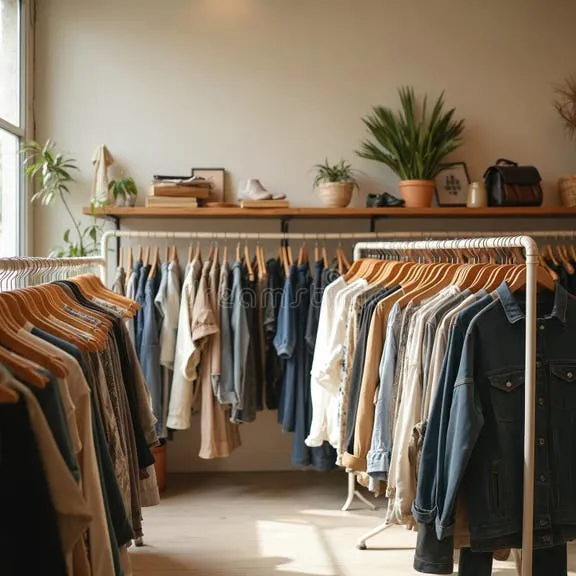
Photo: Scandinavian secondhand thrift store organized minimal clothing rack, via thumbs.dreamstime.com
Walk into a secondhand shop in Stockholm on a Tuesday afternoon and you'll find people who look like they're just... shopping. Not hunting. Not curating. Not performing a lifestyle for an imaginary audience. They're looking for a sweater they need, or a lamp that fits the corner, or a jacket in the right shade of navy. The transaction is mundane in the best possible way.
Walk into a vintage shop in Brooklyn or Silver Lake on the same Tuesday and the energy is completely different. There's a self-consciousness to it, a sense that what you find here says something important about who you are — or at least who you want people to think you are.
The clothes are often similar. The philosophy underneath them is miles apart.
Premium by Default
Scandinavian secondhand culture doesn't treat previously owned goods as a lesser category that needs to be redeemed by the right styling or the right story. The baseline assumption is that a well-made item that has already existed in the world is, in many ways, preferable to a new one. It's been tested. It's proven it can last. Its environmental cost has already been paid.
This isn't a niche attitude held by particularly eco-conscious consumers. It's fairly mainstream — embedded in how families shop, how young people furnish their first apartments, how even people with comfortable incomes approach clothing. In Sweden, secondhand retail has grown dramatically over the past decade not because sustainability became trendy but because the underlying logic was always there, waiting for the infrastructure to catch up.
ReTuna, a shopping mall in Eskilstuna, Sweden, operates entirely on repurposed and recycled goods. It's not a pop-up or an art project. It's just a mall — one that happens to stock only things that already existed. The concept works because it doesn't require customers to feel virtuous for shopping there. It just has to be convenient and well-organized, which it is.
What American Vintage Actually Is
American vintage culture is genuinely interesting and genuinely complicated, and it deserves more than a simple takedown.
The thrift store as discovery space has a long, legitimate history in US subcultures — punk, hip-hop, art school, queer communities all developed rich relationships with secondhand clothing that were about identity, creativity, and economic necessity simultaneously. That history is real and it matters.
But somewhere along the way, vintage shopping in America got aestheticized into something else. The thrift haul became content. The rare find became social currency. Depop and Instagram turned the act of buying secondhand into a performance that, ironically, requires constant consumption to sustain. You have to keep finding things, keep posting, keep proving your eye is good enough.
The environmental benefit — which was supposed to be the whole point — gets murky when people are buying more secondhand items than they would have bought new, simply because the friction is lower and the identity payoff is higher. That's not anti-consumption. That's just consumption with better PR.
The Authenticity Trap
Here's the tension American vintage culture hasn't fully worked out: it markets itself as anti-fashion while operating entirely within fashion's logic.
The hunt for authenticity — the perfect worn-in flannel, the obscure band tee, the Levi's with the right fade — is still a hunt for the right object to signal the right identity. It's still asking clothes to do the heavy lifting of communicating who you are. The item just has to look like it wasn't trying, which requires considerable effort.
Nordic secondhand culture, at its best, sidesteps that trap because the goal is different. The goal is a good coat, not a statement coat. A functional bookshelf, not a curated bookshelf. When the objective is utility rather than identity, the anxiety around finding the exactly right thing dissolves pretty quickly.
This doesn't mean Scandinavian shoppers have no aesthetic preferences — obviously they do, and Nordic design sensibility is distinctive and considered. But there's a difference between having taste and requiring every object you own to perform your taste for other people.
How This Is Changing American Closets
Something is shifting, though. Slowly, unevenly, but genuinely.
A growing segment of younger American consumers — particularly those who came of age during multiple economic crises and a pandemic that clarified what actually matters — is starting to approach secondhand shopping less as a statement and more as a default. Not because it's cool. Because buying new feels increasingly absurd when perfectly good versions of things already exist.
ThredUp's annual resale reports consistently show accelerating growth in the secondhand market, but more interesting than the numbers is the stated motivation shift. Fewer buyers are citing fashion and discovery as primary drivers. More are citing value, practicality, and a vague but genuine discomfort with the waste of fast fashion.
That's a quiet but meaningful move toward the Nordic baseline: secondhand not as identity, but as sense.
The Wardrobe That Doesn't Need to Be Explained
The most radical thing about how Scandinavians approach secondhand clothing is how unradical it is. There's no manifesto attached to buying a used coat. No content strategy. No need to explain the choice or frame it correctly so it reads as intentional rather than just cheap.
It's just a coat. It fits. It was ten dollars. Done.
American fashion culture — including its vintage and sustainability subsets — has a hard time with that kind of quietness. We've been trained to communicate through our clothes, to make our consumption legible as taste, values, and identity all at once. The idea that a garment could just be a garment, useful and sufficient without being meaningful, feels almost counterintuitive.
But that's exactly what a more honest relationship with clothes might look like. Not a capsule wardrobe photographed on a white background. Not a thrift haul that performs effortlessness through obvious effort. Just clothes that work, sourced from wherever makes sense, worn without requiring an audience.
Scandinavia got there first. America is catching up, one unremarkable Tuesday shopping trip at a time.