An Acquired Taste Is Still a Taste: What Fermented Fish and Rye Bread Teach Us About American Food Anxiety
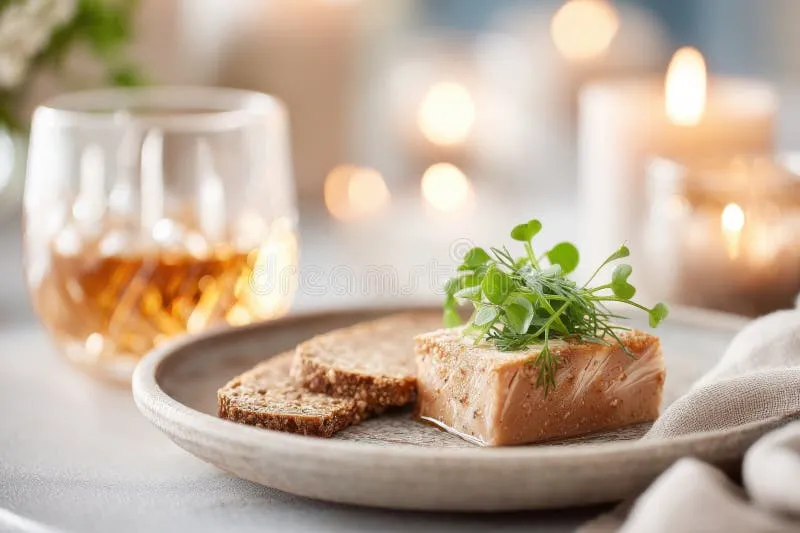
Photo: Nordic Scandinavian traditional food spread fermented fish rye bread rustic table, via thumbs.dreamstime.com
Let's start with surströmming.
If you've heard of it, you probably know it as the Swedish fermented herring that gets described in American food media with the same breathless horror usually reserved for extreme sports or financial disasters. Videos of people opening cans outdoors — because the smell indoors is genuinely inadvisable — rack up millions of views. The subtext is always the same: can you believe people actually eat this?
The Swedes watching those videos have a different reaction. Mild amusement, mostly. Because surströmming isn't a stunt or a dare. It's a tradition that's been feeding people through harsh winters for centuries, that has a specific season, a specific ritual around its preparation, and a specific community of people who genuinely love it. It's not weird food. It's their food.
The gap between those two perspectives is the whole story.
Comfort as Default Setting
American food culture has a genius for accessibility. The ability to take any flavor from anywhere in the world and make it approachable, familiar, and immediately satisfying is a real skill — and it's produced some genuinely great food. But it's also produced a baseline assumption that food should be easy to like. That a dish requiring patience, context, or a period of adjustment before it clicks is somehow failing at its job.
This shows up everywhere. In the way American palates have historically defaulted to sweetness as a flavor modifier — sweet barbecue sauce, sweet coleslaw, sweet cocktails. In the way spice levels get calibrated down for mass-market products. In the way fermentation, which is one of the oldest food technologies in human history, got rebranded as a wellness trend rather than a culinary tradition, making it easier to market but stripping it of most of its actual complexity.
The result is a food culture that is extraordinarily broad and genuinely varied in some ways, but also deeply anxious about difficulty. A food that challenges you is treated as a problem to be solved rather than an experience to be worked toward.
What Nordic Cuisine Is Actually Doing
Scandinavian food traditions were built under conditions that didn't allow for much sentimentality about palatability. Long winters, short growing seasons, and the practical need to preserve everything that could be preserved shaped a culinary philosophy where the process was as important as the product.
Fermentation wasn't a choice — it was infrastructure. Pickling, curing, smoking, and fermenting were the technologies that kept people alive between harvests. The flavors those processes produce — sharp, funky, sour, deeply savory — aren't incidental. They're the point. They carry information about time, effort, and the specific conditions under which the food was made.
Dark rye bread, the kind that's dense and slightly sour and nothing like the soft sandwich loaves that dominate American grocery stores, is a good example. It takes days to make properly, requires a mature sourdough starter, and produces a flavor that builds over time rather than delivering immediate gratification. A lot of Americans encounter it and find it too heavy, too sour, too much. Nordic bakers would say: give it a minute. Eat it with something. Come back tomorrow.
That patience — the expectation that understanding a food might take time — is baked into the culture. Literally.
The Discipline of Pleasure
There's a distinction worth making here between difficulty for its own sake and difficulty as part of how pleasure works.
Nordic food traditions aren't austere. They're not about denying enjoyment or eating things you hate because it's good for you. The people eating pickled herring on rye with a cold aquavit on a Friday afternoon are not suffering. They are having a very good time. But the enjoyment is layered — it involves the right context, the right company, the right sequence of flavors, and a familiarity with the ingredients that took time to develop.
That's a different model of pleasure than the American one, which tends to prioritize immediacy. The best bite of the best burger is supposed to be the first bite. The flavor should hit instantly, fully, without requiring anything from you. There's nothing wrong with that kind of pleasure — it's real and it's valid. But it's not the only kind, and treating it as the default standard makes everything else seem deficient.
Acquired tastes — coffee, wine, aged cheese, bitter greens, fermented anything — require an investment before they pay off. Nordic food culture assumes that investment is worth making. American food culture has largely decided it's too much to ask.
The Fear Underneath the Flavor
What's actually going on when Americans film themselves reacting to surströmming with theatrical disgust?
Some of it is just entertainment — food reaction content is a genre, and extreme reactions are good content. But some of it reflects something more interesting: a genuine discomfort with the idea that a food could be acquired, that taste is not fixed, that you might not immediately understand something that other people find deeply satisfying.
That's a vulnerable position to be in. It means admitting that your palate isn't the universal standard, that your immediate reaction to a flavor isn't the final word on whether it's good. It means accepting that you might be the inexperienced one in the room.
For a food culture that has spent decades positioning American preferences as the baseline against which everything else gets measured, that's actually a significant ask.
Something Is Changing
The New Nordic food movement — which put chefs like René Redzepi on the global map — did something important for American food culture even if it didn't fully land everywhere. It made the argument, loudly and beautifully, that restraint and challenge and locality and seasonality could coexist with extraordinary pleasure. That a meal could be difficult and still be the best meal you've ever had.
And that argument found an audience. Fermented foods are genuinely mainstream in the US now in a way they weren't fifteen years ago. Sourdough is no longer a specialty item. Bitter flavors have made a real comeback in craft cocktails and restaurant menus. These are small shifts, but they're real ones.
The deeper shift — toward accepting that some good things take time to understand — is slower. But it's happening too, one jar of kimchi and one loaf of dark rye at a time.
Surströmming might be a bridge too far for most American kitchens. That's fine. But the philosophy underneath it — that a food worth eating might ask something of you first — is one the American palate could genuinely use.
Acquired tastes don't happen by accident. They happen because someone decided the payoff was worth the patience. That's not a Nordic thing. That's just how the best things work.